


Fire Watch Security: What It Is, When It's Required, and How to Arrange Coverage Fast
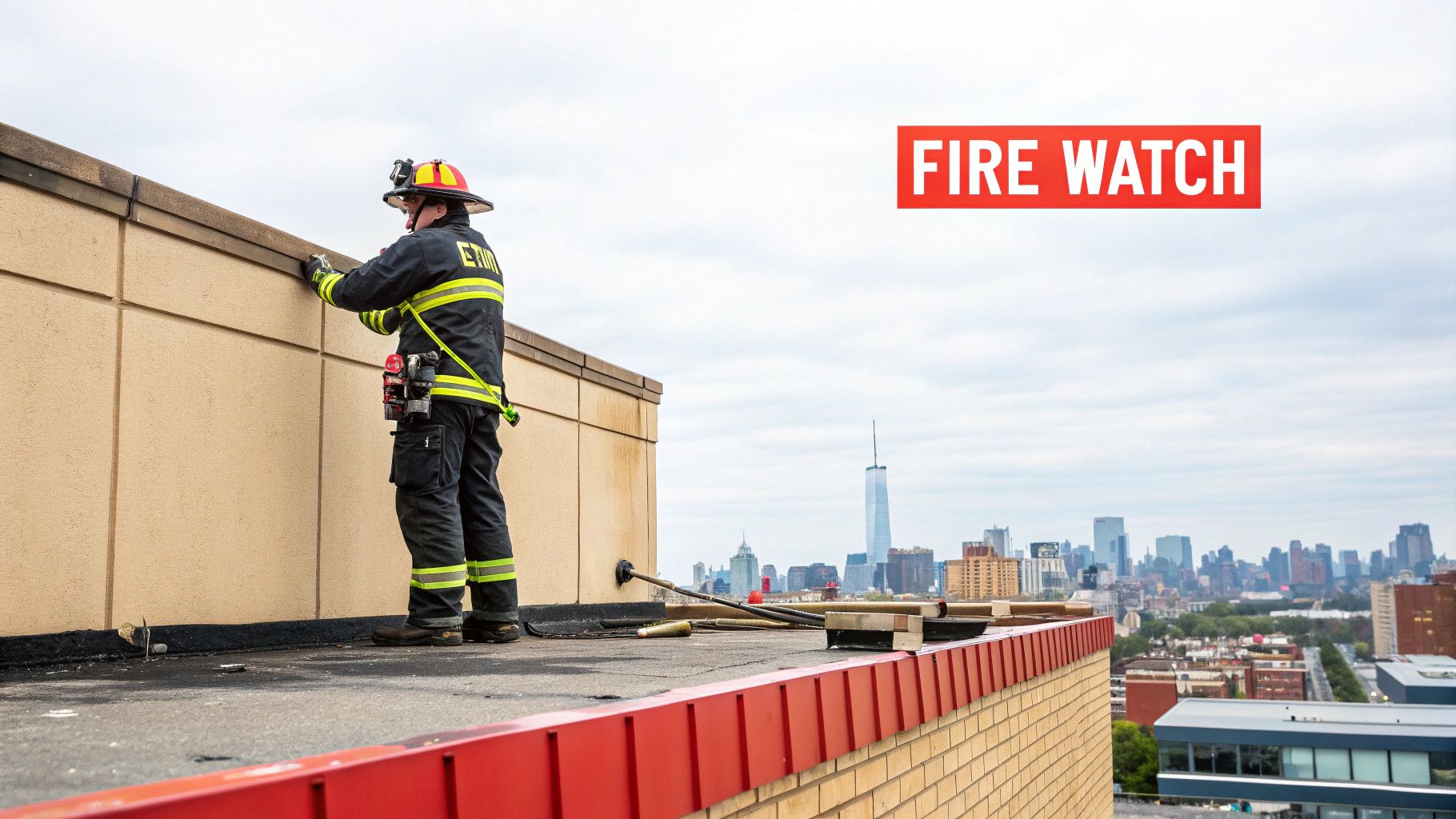
Most security services are planned in advance. Fire watch is the exception—it's the service property owners typically discover they need right now, often after a phone call from a fire marshal or an alarm company. Your sprinkler system failed inspection. Your fire alarm is down for repairs. A water main break disabled your suppression system. And suddenly you're legally required to have trained personnel physically watching your building around the clock until it's fixed—or face fines, shutdown orders, and massive liability exposure.
If you own or manage commercial property, understanding fire watch before you need it will save you serious stress. Here's the complete picture.
What Is a Fire Watch?
A fire watch is the assignment of dedicated personnel to continuously patrol a property watching specifically for signs of fire—because the building's automatic detection or suppression systems are impaired and can't do that job themselves. Fire watch personnel conduct continuous patrols of all required areas on a defined schedule; watch for smoke, fire, and hazardous conditions; maintain detailed logs of patrols and observations, which fire marshals can demand to see; know the property's alarm points, extinguishers, and evacuation routes; and are ready to immediately call the fire department and begin alerting occupants if fire is detected.
In essence: when your fire systems go down, humans become the fire system.
When Is Fire Watch Required?
Fire codes—generally based on national fire standards and enforced by your local fire marshal—commonly require fire watch when:
Fire alarm or sprinkler systems are out of service beyond a short defined window (often mere hours) in occupied buildings—whether from malfunction, damage, maintenance, or failed inspection.
Water supply to suppression systems is interrupted—water main breaks, utility work, or system repairs.
Construction and renovation work impairs fire systems or introduces hazards, including hot work like welding and cutting in many circumstances.
Special events exceed normal occupancy or introduce unusual risks, at the fire marshal's discretion.
Buildings without required systems are temporarily occupied, or during phased occupancy of new construction.
The critical points: requirements are dictated by code and your local fire authority, not by preference; the required coverage is typically continuous—24 hours a day until systems are restored; and non-compliance carries real consequences—citations, fines that accumulate daily, orders to vacate the building, and devastating liability exposure if a fire occurs during a known impairment with no watch in place. Insurance implications alone should command attention: a fire during a code-required-but-absent fire watch is an insurer's dream denial.
Why Fire Watch Is Almost Always Urgent
Notice the pattern in the triggering events: they're unplanned. Systems fail during inspections. Pipes break at night. Contractors damage alarm lines mid-project. When it happens, the clock starts immediately—many jurisdictions require fire watch to begin within hours of the impairment—and your building may not be legally occupiable without it.
That urgency is why the right question isn't "who does fire watch?" but "who can have trained personnel at my property tonight—and staff it continuously for as long as repairs take?" Fire watch is a staffing marathon: covering every hour of every day, potentially for days or weeks, with documented, code-compliant personnel. This is precisely what professional security companies are built to do.
What Professional Fire Watch Coverage Looks Like
Rapid deployment. Established security companies can typically mobilize fire watch officers quickly—often the same day—because emergency coverage is core to their operations.
Trained, briefed personnel. Officers arrive understanding fire watch duties: patrol routes covering all required areas, log-keeping that satisfies fire marshal review, hazard awareness, and emergency notification procedures.
Continuous, reliable staffing. The company manages the shift math—relief coverage, backups, and seamless handoffs—so your 24/7 requirement is met without gaps for however long repairs take. A coverage gap in your fire watch log is a problem you don't want to explain to a fire marshal.
Documentation that protects you. Complete patrol logs demonstrating compliance—your evidence for the fire marshal, your insurer, and your own liability protection.
Coordination. Professional providers work with your facilities team, alarm contractors, and the fire authority so the watch stands down properly when systems are restored and verified—not a day early, not a day late.
A Practical Playbook for Property Managers
Prepare before it happens: know your local fire watch requirements in general terms; keep a security provider relationship in place—the moment to find a fire watch vendor is not during the emergency; and ensure your alarm and sprinkler contractors know to notify you immediately of impairments, since the compliance clock starts at impairment, not at your convenience.
When it happens: notify your fire authority as required; engage your security provider immediately for coverage; document everything—the impairment, notifications, coverage start, and repair timeline; expedite repairs, since every day of impairment is a day of watch costs and elevated risk; and keep the watch running until systems are fully restored, tested, and cleared.
Covered Fast, Covered Right
Fire watch is one of those services you hope never to need—and need immediately when you do. Altais Private Security provides responsive fire watch coverage for commercial properties, construction sites, and facilities across the Midwest: trained officers, continuous staffing for the full duration of your impairment, and documentation that keeps you compliant and protected.

If you need fire watch now—or want a provider in place before you ever do—contact Altais Private Security today.



Find Us On


